Mon–Thu 10:00–19:00
Fri 10:00–20:00
Sat 10:00–15:00
Closed Sundays and public holidays
MenuEN
LACELL · Medical Column
XERF or ONDA for Sagging Under the Chin: What Should Come First?
When loose skin is the main concern under the chin, XERF radiofrequency tightening is one option to consider; when fullness and tissue thickness also contribute, ONDA may be worth discussing. ONDA can also address skin laxity, depending on the handpiece, so the choice is not simply skin versus fat. An examination of skin excess, fat thickness and chin structure helps establish the first treatment goal.
Keep the head relaxed when identifying the area of concern. AI-generated illustration, not a patient or treatment result.
Does a fold under the chin mean that fat should be reduced first?
Not necessarily. We first distinguish loose skin, fullness in the tissue beneath it and a less defined contour related to chin structure. A fold that appears only when you look down does not establish excess fat.
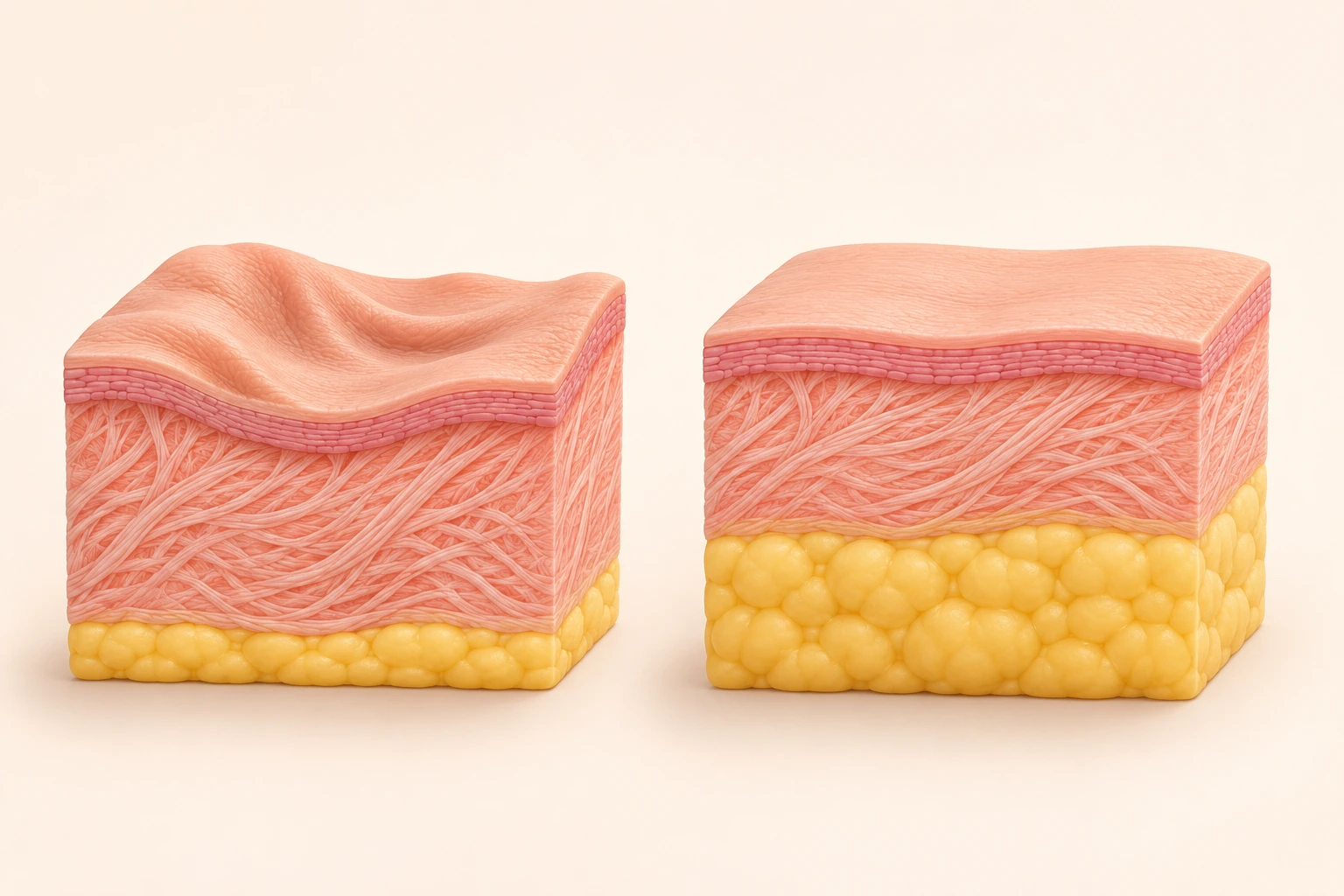
During consultation, we examine relaxed front and side views and assess the thickness and movement of skin and underlying tissue. Reducing volume where thin skin is mainly loose may not improve the contour you want. Conversely, addressing skin firmness alone may leave substantial fullness unchanged.
Please point to the precise area that bothers you: fullness immediately beneath the chin is different from tissue descending beside the mouth. Marked laxity or a structural chin concern may require a discussion beyond these two devices.
How do XERF and ONDA treat the same area differently?
XERF delivers monopolar radiofrequency through a contact tip; ONDA delivers microwave energy through a handpiece. Both use heat, but their energy delivery and treatment planning are different.
XERF uses 6.78 MHz and 2 MHz. The tip, depth setting, intensity and treatment area are selected according to tissue condition and the goal of improving laxity. Choosing a deeper setting does not by itself establish a better lift or safe fat reduction.
ONDA uses 2.45 GHz microwaves. Depending on the handpiece and plan, the goal may involve skin firmness, localized tissue volume or contour. LACELL’s current website describes 3 mm and 7 mm handpieces. Confirm the actual handpiece and intended target rather than choosing from a name or depth number alone.
What to compare
XERF
ONDA
Energy
6.78 MHz and 2 MHz monopolar RF
2.45 GHz microwaves
Goal to discuss
Skin and soft-tissue laxity
Skin firmness and localized tissue volume or contour
Plan to confirm
Tip, depth setting, intensity and area
Handpiece, tissue thickness and area
Important limit
Deeper or more treatment is not automatically better
Evidence from a different handpiece is not interchangeable
Skin laxity and underlying tissue volume are assessed separately. AI-generated model, not actual measurements or before-and-after results.
Do the studies show which device is better?
The studies discussed here do not establish a winner. They used different participants, treatment areas and outcome measures.
A 2026 XERF study treated 39 participants twice, four weeks apart, with the EFFECTOR 60 tip. At 90 days after the final treatment, 36 met the study’s GAIS threshold of at least 3. The uncontrolled, manufacturer-supported study assessed facial improvement; it does not quantify under-chin fat loss.
A 2025 ONDA study treated 10 women’s submental areas twice, 30 days apart, using the Pocket handpiece. Mean laxity grade fell from 3.6 to 2.3 at 12 weeks after treatment. This small uncontrolled study does not establish equivalent outcomes with the other handpieces described on LACELL’s website.
Ask whether a study used the same area, handpiece and assessment period as your proposed treatment. A responder proportion and a laxity grade cannot be ranked against each other as if they measured the same outcome.
When and how should results and recovery be assessed?
Comparison after the initial swelling settles is more useful than tightness felt immediately after treatment. Changes from non-surgical heat-based tightening can develop gradually, so a same-day photograph should not determine another session.
Keep lighting, camera position and head posture consistent in front and side photographs, and note weight changes. Compare fullness and loose skin separately to identify what remains. Follow-up timing should reflect the actual treatment and skin response.
Redness, swelling, warmth and tenderness can occur with either device. Thermal injury, blisters and sensory changes also require attention. Cooling does not remove all risk or guarantee zero recovery time. Contact the treating clinic promptly for worsening pain, blistering or persistent altered sensation.
What information can change the treatment plan?
Tell us where and when you had fillers, threads or fat treatments, and whether swelling or altered sensation remains. Implanted medical devices, metal implants, pregnancy, wounds and inflammation in the area must also be discussed before treatment.
Describe both the area you want to reduce and the volume you want to preserve. Before proceeding, clarify the goal, the actual tip or handpiece, and when the result will be reviewed. A defined treatment goal is more useful than assuming that both devices are necessary.
This column provides general information to support consultation. Suitability and treatment extent require examination; it does not present a direct comparative trial or LACELL patient outcomes.
Agree on the treatment goal, handpiece and follow-up assessment. AI-generated illustration.
Frequently asked questions
Is it better to have XERF and ONDA on the same day?
Using both does not automatically improve the outcome. First establish whether each has a separate treatment goal and consider overlapping heat exposure and recovery. Assessing one treatment before deciding what remains to be addressed is another option.
Can I treat the area under my chin if my cheeks are thin?
Thin cheeks do not automatically exclude under-chin treatment. Cheek and submental tissue thickness need separate assessment, with a clear distinction between volume to preserve and areas to treat. In thin or already hollow areas, the first question is whether treatment is appropriate at all.
Should I choose a stronger session if my trip is short?
Treatment intensity should not be increased simply to fit a short stay. More heat does not replace recovery or guarantee a better result. Share your travel dates and important events in advance, allow time to assess the initial response, and agree on contact and care arrangements after you return home.
Co-director of LACELL Clinic. A board-certified medical specialist focusing on aesthetic and functional medicine, with a background in both medicine and pharmacy. She is also a licensed pharmacist.
Co-director of LACELL Clinic. A board-certified medical specialist focusing on aesthetic and functional medicine, with extensive experience in personalized anti-aging and regenerative treatments. She is also a 10THERA Key Doctor.